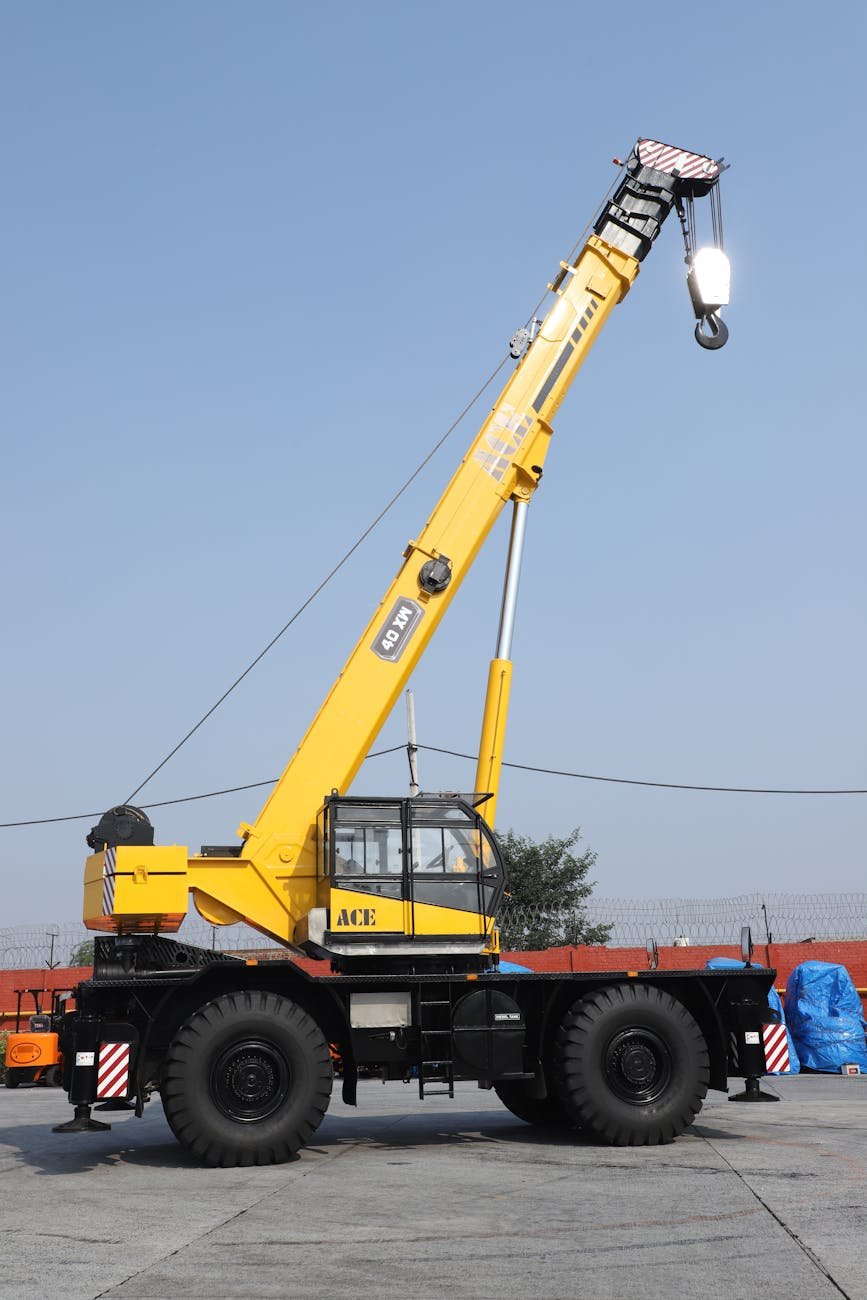
Crane Safety HSE Training
🏗️ Introduction: The Power & Peril of Cranes
“A single crane accident can take lives, collapse buildings, and cost millions—all in seconds. Last year, [X] crane-related fatalities happened because someone thought, ‘We’ve done this a hundred times.’ Today, we’re rewriting that story.”
“By the end of this session, you’ll know:
✔ How to spot deadly hazards before they strike
✔ The non-negotiable rules for rigging and signaling
✔ Why ‘routine’ lifts are the most dangerous
✔ What to do when things go wrong—because hesitation kills“
[Hold up a snapped wire rope]
“This failure dropped 12 tons last month. Let’s make sure your lifts never make headlines.”
⚠️ Section 1: Crane Hazards – The Killers You Can’t Always See
“Cranes don’t fail—people do. These are the top ways disasters happen:”
Structural Failures
• Overloaded booms
• Corrosion hidden under paint
• Ground settling mid-lift
Operational Hazards
• Power line contact (Electrocution in 3 seconds flat)
• Swing radius strikes (“It wasn’t moving fast” still kills)
• Two-blocking (Snapping cables with catastrophic force)
Human Factors
• Distracted spotters
• Miscommunication
• Complacency with “simple” lifts
[Show NTSB accident footage]
“See how slowly this collapse started? That’s your window to act.”
📜 Section 2: The Golden Rules of Crane Work
“Break these, and you’re gambling with lives:”
1️⃣ Pre-Lift Meeting Required
• Review load charts together
• Mark swing/set-down zones
2️⃣ Inspect or Reject
• Hooks (No cracks, twists, or 10% throat wear)
• Wire ropes (No broken strands or kinks)
• Outriggers (Fully extended on stable ground)
3️⃣ The 10-ft Power Line Rule
• If you can’t measure it, assume it’s live
• Use dedicated spotters
4️⃣ One Voice Commands
• Only the designated signaler speaks
• Hand signals MUST be standardized
[Demo: Two-way radio failure drill]
“When comms die, the lift stops—no exceptions.”
🔧 Section 3: Rigging – Where Most Accidents Start
“The load doesn’t care if you’re in a hurry. Do it right:”
Sling Selection
• Chain vs. wire vs. synthetic
• Angle math: 60° = 2x tension on slings
Load Control
• Tag lines mandatory for unstable loads
• Never guide with your hands
Center of Gravity
• Test lift 6 inches, verify balance
• Shifting loads kill fast
*[Hands-on: Calculate load on a 2-sling rig]*
*”Get this math wrong, and that 5-ton load becomes 10 tons on one sling.”*
🚨 Section 4: Emergency! When Things Go Wrong
“If you hear that sound—act instantly:”
- STOP OPERATION (Kill all movement)
- CLEAR THE AREA (Yell “CRANE FAILURE!”)
- SECURE THE SCENE (Barricade drop zones)
- REPORT EXACTLY (“Boom creaking at 45°” beats “Something’s wrong”)
[Play 911 call from real crane collapse]
“Hear the panic? Training replaces fear with action.”
💡 Section 5: Would You Pass This Test?
“Let’s evaluate real scenarios:”
Scenario 1:
“The foreman says, ‘Just nudge that load over—we don’t need a full inspection.’ Your move?”
→ SHUT IT DOWN (80% of crane fatalities involve bypassed procedures)
Scenario 2:
“Wind picks up mid-lift. The load starts spinning. Do you…?”
→ LOWER SLOWLY (Never fight momentum—control the descent)
✅ Conclusion: Your Crane Safety Pledge
“Repeat after me:
‘I will inspect like my life depends on it—because it does.
I will speak up about unsafe lifts—without apology.
I will respect the machine’s power—never its limits.’”
“Remember: There are no old, bold crane operators.”
PPE Safety HSE Training: Your Last Line of Defense
Electrical Safety HSE Training
Confined Space Safety HSE Training
❓ FAQs
Q: How often must cranes be inspected?
A: Daily by operator, monthly by qualified tech, annually by engineer.
Q: Can you operate without certification?
A: Only certified operators—no ‘buddy system’ training.
Q: What’s the #1 rigging mistake?
A: Using slings at the wrong angle (changes load forces drastically).
Q: Who’s liable in a crane accident?
A: Everyone—operator, spotter, rigger, and supervisor.

Thanks for the crane safety rules.
Please who inspect the crane? Is it the safety team or the crane operational crew.
Also the safety officer may not have the full operational understanding of the crane.
Again, how often should a Crane be inspected, periodically or routine or whatever it’s to be used for operation?